

On a recent visit to my local supermarket, I purchased a can of Pringles potato crisps (according to the Pringles website they are crisps not chips). Although I prefer Stax, I opted for a can of Pringles this particular time. My purchase – a container of Miller Lite Beer Can Chicken flavor Pringles. As a beer drinker, how could I resist? According to the manufacturer, “each stackable crisp delivers the savory taste of roasted beer can chicken and a hint of Miller Lite beer for a mouthwatering, grill-inspired snack”, while the company’s April press release announcing the launch of the product notes that the snack “deliciously combines the flavor of savory roasted chicken complete with notes of garlic and onion with the authentic flavor of the Original Light Beer.”

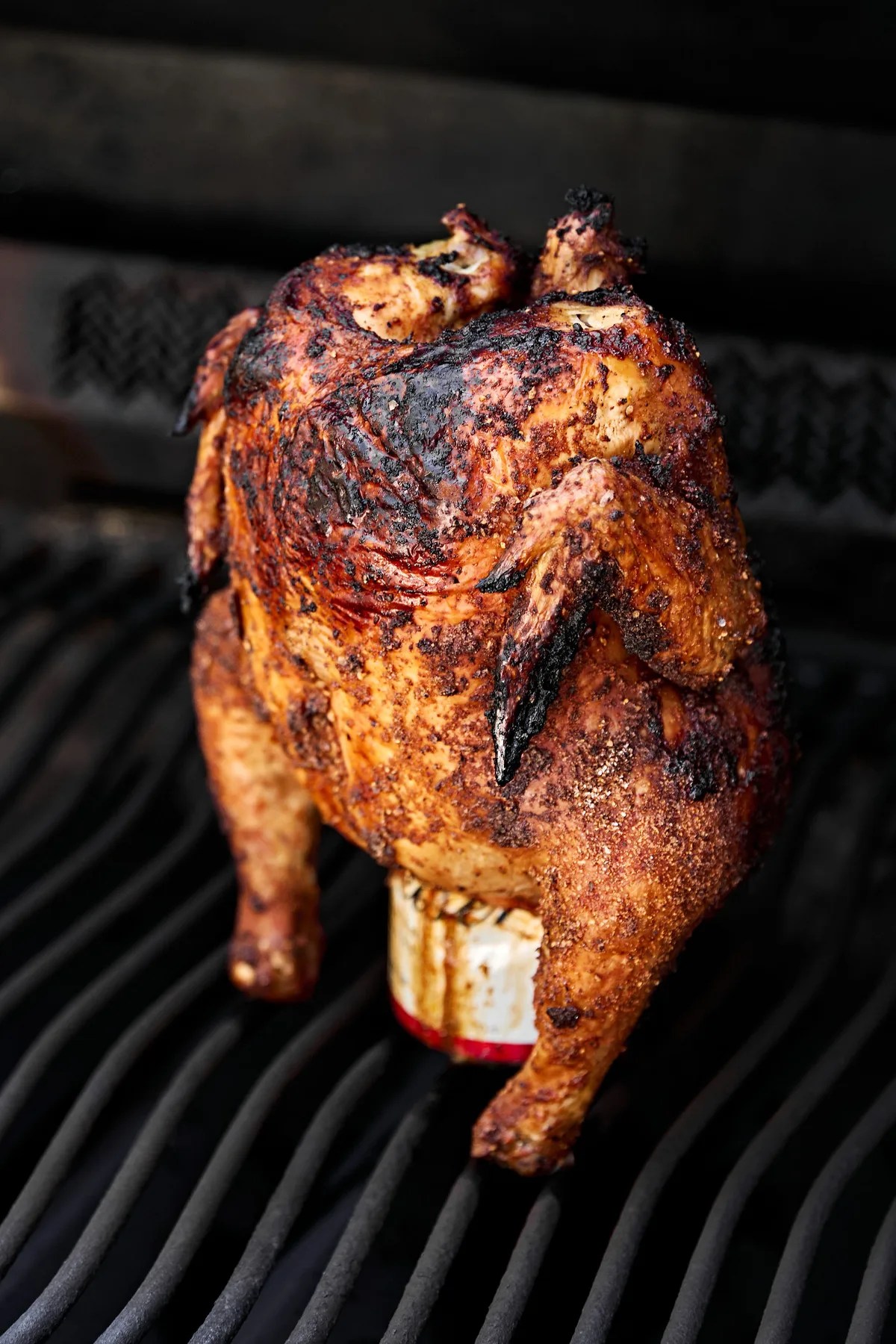
For those of you unfamiliar with Beer Can Chicken, it is essentially a method for barbecuing a whole chicken, in which the chicken is balanced on a partially filled can of beer. The upright position in which the chicken is cooked allows fat to drain away. This results in a crispy skin, while the beer contributes to a moist chicken.
The collaboration between the manufacturers of Pringles and Miller Lite is an example of what is called co-branding (sometimes called cross-branding). In a paper published in the International Journal of Consumer Studies, Ceyda Paydas Turan of the University of Surrey in England, defined co-branding as “a marketing strategy in which two or more brands are presented simultaneously to the consumer as one product to create a sum of brand assets, that is greater than that of the individual brands” Turan goes on to state that “the purpose of forming a co-brand is to create synergies, boost awareness and enhance the value of the brands involved by leveraging each brand through the transfer of associations from one brand to the other and differentiating them from the competition.” Put more simply, co-branding allows companies to tap into each other’s customer base, thus raising awareness of each brand to a potentially new audience. Enhanced customer awareness should result in increased sales.
Co-branding is quite common. For example, for many years American Express has teamed up with Delta Airlines to offer their customers the Delta Sky Miles American Express card. Earlier this year, Jackson Family Wines partnered with the National Basketball Association to co-brand three wines from its Kendall-Jackson range. Also, earlier this year, Uber entered into a co-branding partnership with Gemini Trains, one of the companies offering train service between the United Kingdom and France via the Channel Tunnel.
While many co-branding partnerships are successful and reap benefits for the companies involved, there have been some high-profile failures. Take the co-branding partnership between Lego and Shell. The benefits to both were obvious. Lego gas stations, trucks, and racing cars bearing the Shell logo put the brand in front of both current (parents) and future (children) drivers, while the toymaker’s Shell-branded products were available for sale at the oil giant’s gas stations in over two dozen countries. As a result of a campaign by Greenpeace, however, in which the environmental activist group argued that it was inappropriate for a children’s toy maker to partner with an oil corporation, Lego made the decision in 2014 to end its partnership with Shell.
One of the ways to measure the success of a co-branding initiative is how consumers judge and evaluate the co-branded product. At the time of writing, consumers gave the Miller Lite Beer Can Chicken a score of 3.4/5, with 52% recommending the product. Of the 40 reviewers, 19 gave it 5 stars, while 12 gave it 1 star. With 31 of the 40 reviews being either 1 or 5 stars, it suggests that consumers either loved the product or hated it.
Consumer reviews reflected this range of opinion, ranging from:
“I think they’re actually very good, like the flavor and the minimal amount of saltiness. Like not overpowering in any way but a solid, good flavor”,
“No idea who said this was anywhere near beer chicken, but it’s not. If La Croix made chips, it would be this. Severely lacking in accuracy and flavor profile as advertised.”
Interestingly, on the back of the can there is a statement that declares that the “product does not contain alcohol”. Despite this fact, an additional statement notes that “this licensed product is intended for adults of legal drinking age”.

Occasionally, when doing research for one of my blog entries, I end up down an internet rabbit hole. This happened on this particular occasion. So, I want to shift gears a little and say a few words about the design of the iconic Pringles can itself. It was co-invented by Fredric J. Baur and Harold Kenneth Hawley, organic chemists and food storage scientists who worked for Procter and Gamble (P&G) the Cincinnati-based producer of Pringles. Baur was born in Toledo, OH – my current city of residence – on July 14, 1918. He attended and graduated from The University of Toledo – my current place of employment – before going to The Ohio State University where he completed both a master’s and PhD in organic chemistry. Baur started working for P&G in the late 1940s, retiring in the early 1980s. In 1966, Baur and Hawley applied for a patent for the can they had designed to hold Pringles. Their patent was approved in 1970.


Bauer died in Cincinnati, OH on May 2008 at the age of 89. At his request, some of his ashes were deposited in a Pringles can and then buried. As I reflected on Baur’s ashes being pIaced in a Pringles can a thought crossed my mind – did the suburban Cincinnati funeral home responsible for handling Fredric Baur’s funeral miss out on a great co-branding opportunity?
Further Reading:
Turkmen, Ceyda Paydas. 2021. Successful drivers of co-branding: A meta-analysis. International Journal of Consumer Studies, Volume 45, Issue 4, Pages 911-936.