

Earlier this year, I had the opportunity to give a presentation to faculty members at Mid Sweden University. I was invited to give the presentation by Professor Wilhelm Skoglund, who was leading a research project examining the role of cultural and creative industries in place development, particularly in Europe’s peripheral regions. Wilhelm was familiar with my research on craft breweries and believed that insights from my work could contribute to the project’s efforts to better understand how cultural and creative enterprises can support local and regional development. My presentation was given via Zoom, an ideal format for Mid Sweden University, whose faculty and students are based on two campuses located in Östersund and Sundsvall. In addition to faculty, interested policy makers were also invited to attend my presentation.
My presentation, Craft Brewing and Place Development, focused on how craft breweries do more than make beer. As small, community-oriented businesses, they can revitalize vacant spaces, bring people together, and help communities celebrate and strengthen their unique identities.
I began my presentation by distinguishing between the concepts of space and place. The distinction is straightforward: space is simply a physical location, whereas place is a physical location that has acquired meaning, identity, and emotional significance through human experience. For example, an abandoned warehouse is merely a space. When that same warehouse is transformed into a brewery where people gather, build friendships, celebrate special occasions, and create lasting memories, it becomes a place. The structure itself may remain unchanged, but its meaning and significance to the community are fundamentally transformed. As the geographer Yi-Fu Tuan wrote in 1979, “Space is more abstract than place. What begins as undifferentiated space becomes place as we get to know it better and endow it with value.”
The process of turning space into place is referred to by geographers as place-making and contributes to what geographers call sense of place. Sense of place refers to the emotional connections and attachments that individuals develop with specific locations and environments. The concept also includes the distinctive qualities, meanings, and characteristics that give a place its unique identity.
Because sense of place is shaped by the meanings and identities associated with particular locations, the adaptive reuse of historic buildings offers a powerful mechanism for transforming space into place. Adaptive reuse is the practice of taking an unused, underutilized, or obsolete building and giving it a new purpose The craft brewing industry offers hundreds of examples of adaptive reuse, with breweries occupying buildings that once served very different functions, including factories, warehouses, churches, schools, fire stations, and other historic structures.
In their paper on the adaptive reuse of heritage buildings, Peter A. Bullen and Peter E. D. Love emphasize the important role that historic structures play in fostering community identity and attachment to place. They argue that:
“People feel a stronger sense of connection with their local surroundings through heritage, which is quite different to the mentality associated with new building stock, in that it can be replicated anywhere and therefore lends no specific connection to the local environment. Heritage buildings are cultural icons and their preservation impacts on community wellbeing, sense of place and therefore social sustainability.”
Bullen and Love’s observation highlights the unique contribution of heritage buildings to place identity. Unlike modern structures that can often be replicated across locations, heritage buildings embody the history, culture, and character of a community. As a result, their preservation can strengthen residents’ sense of place, enhance community well-being, and contribute to the long-term social sustainability of local areas.

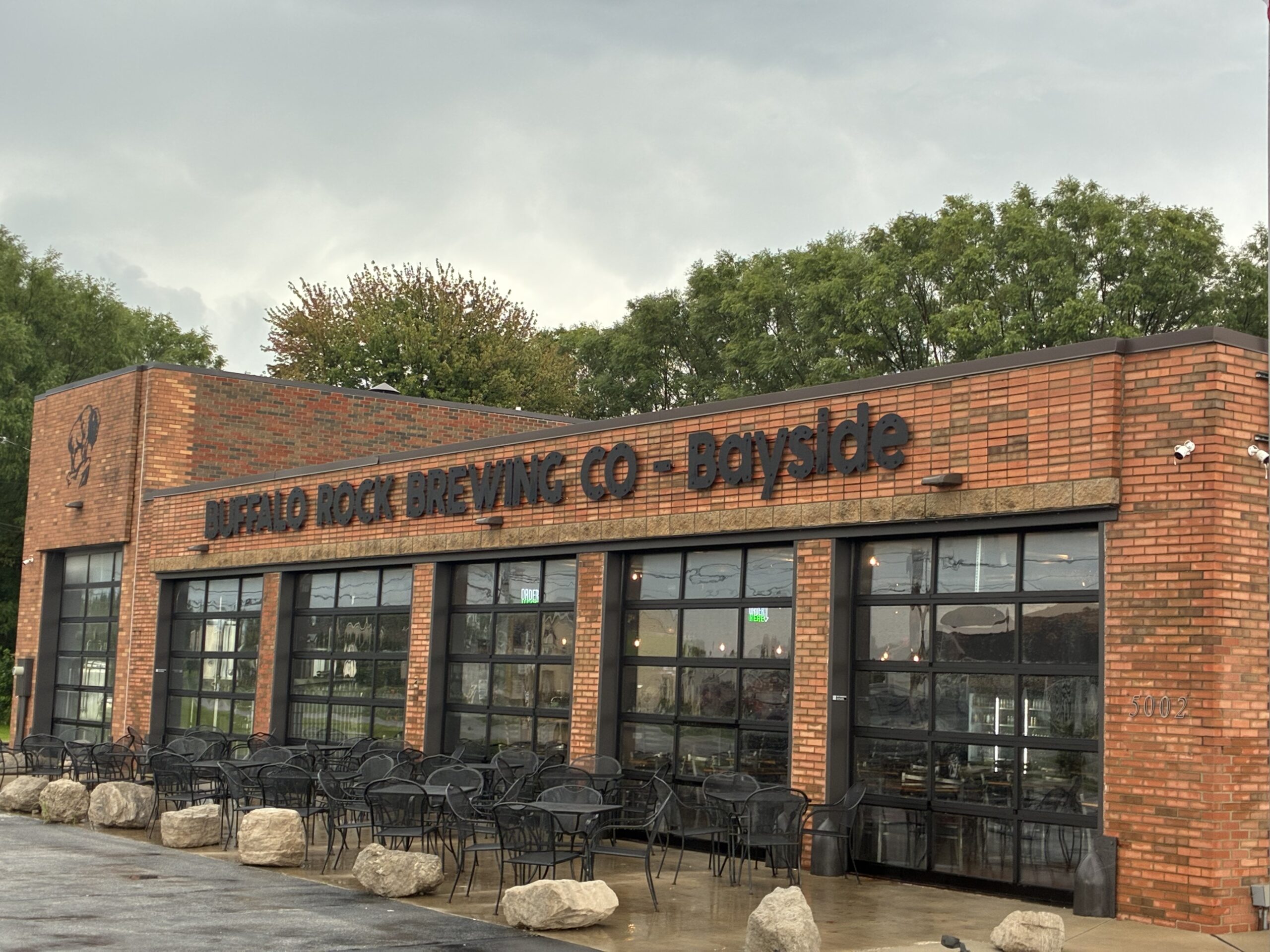
Adaptive reuse is a common practice in the brewing industry. By repurposing abandoned buildings, breweries not only preserve elements of the built environment but also help transform once-forgotten spaces into vibrant community places. Very often, craft breweries become public gathering places, where community members come together to enjoy each other’s company over a locally brewed beer.
Urban sociologist Ray Oldenburg described public gathering spaces as “third places”, locations that exist outside the home (the first place) and workplace (the second place). Third places take many forms, including libraries, community gardens, coffee shops, museums, and craft breweries. These spaces play a vital role in contemporary society by fostering social interaction and community engagement. By bringing people together, third places have been shown to combat loneliness and social isolation, improve quality of life, encourage entrepreneurship and innovation, and strengthen a community’s sense of place.
Many craft breweries function as third places by providing welcoming spaces where residents gather, socialize, attend events, and celebrate local culture. As I noted in a previous blog entry, beyond beer production, craft breweries have become important community hubs, hosting yoga classes, book clubs, running clubs, and a variety of activities that foster social interaction and local engagement.
Many craft breweries deliberately position themselves as “third places” within their communities, serving as gathering spaces that foster social interaction and civic engagement. For example, Colin Rath, co-owner of Migration Brewing in Portland, Oregon, described his brewery’s role in the following way:
“What we’ve created is what’s known as a third space… [Migration is] a place for the community to come together, that hosts the community, and a place that engages with the community and helps facilitate other people’s dreams and aspirations. It’s a place for people to celebrate, to mourn, to raise money for a cause or whatever their thing may be.”
Importantly, local residents also recognize the role that craft breweries play as community gathering spaces. As one craft beer patron in Oklahoma observed:
“People are there to have conversation, and certainly the beer is a draw, but it isn’t about just getting inebriated or partying per se. It is really more about community conversation. That’s what our taproom culture has become: a low-key, welcoming place where people can enjoy a good beer and connect with others. I rarely visit a taproom without striking up a conversation with someone.”
Craft breweries can also serve as important social spaces where residents and visitors interact. In her study of craft breweries in Montana, Ann M, Fletchall, showed how these encounters provide tourists with opportunities to engage with local people, cultures, and traditions, fostering a deeper appreciation of a community’s character. As a result, many visitors come to view craft breweries as more authentic expressions of place than conventional tourist attractions, offering insights into local identity, values, and everyday life that are often absent from more commercialized tourism experiences.
Finally, craft breweries can enhance a community’s sense of place by promoting and reinforcing local identity. One of the most visible ways they do this is through the names they choose for their breweries, as well as the names, labels, and branding of their beers. By drawing on local history, landmarks, cultural traditions, notable individuals, and regional stories, breweries create products that reflect and celebrate the distinctive character of their communities. In doing so, they help strengthen residents’ connections to place while also communicating a sense of local identity to visitors.
In my presentation at Mid Sweden University, I highlighted the example of Great Lakes Brewing Company in Cleveland, OH. Even the brewery’s name underscores its connection to place, referencing Cleveland’s location on the southern shore of Lake Erie, one of North America’s five Great Lakes. In doing so, the brewery draws upon a defining geographic feature of the region and reinforces its identity as a distinctly local institution.
Great Lakes Brewing Company also reinforces its connection to place through the names and stories behind many of its beers. During my presentation, I highlighted four examples that draw directly on the history, culture, and folklore of the Great Lakes region:
- Edmund Fitzgerald Porter honors the Edmund Fitzgerald, the Great Lakes freighter that sank during a storm on Lake Superior on November 10, 1975, resulting in the loss of all 29 crew members. The tragedy remains one of the most significant maritime disasters in Great Lakes history.
- Eliot Ness Amber Lager pays tribute to Eliot Ness, the federal Prohibition agent best known for helping bring down Chicago crime boss Al Capone. Ness later served as Cleveland’s Director of Public Safety from 1935 to 1942, giving the beer a strong connection to the brewery’s home city.
- Commodore Perry IPA commemorates Oliver Hazard Perry, the naval commander whose victory over the British at the Battle of Lake Erie in 1813 was a pivotal moment in the War of 1812.
- Lake Erie Monster Double IPA celebrates the legend of the Lake Erie Monster, a serpent-like creature purportedly measuring 9 to 12 meters (30 to 40 feet) in length and first reported in Lake Erie in 1817. The story has become a lasting element of regional folklore.

Together, these beers demonstrate how Great Lakes Brewing Company incorporates regional history, notable figures, and local legends into its branding, strengthening its identity as a brewery that is deeply rooted in the culture and heritage of the Great Lakes region.
In concluding my presentation, I emphasized that craft breweries should be viewed as more than producers of beer. Through the adaptive reuse of historic buildings, the creation of welcoming third places, and the celebration of local history, culture, and identity, craft breweries can make meaningful contributions to place development. They help transform underutilized spaces into valued places, strengthen social connections among residents, and reinforce the distinctive characteristics that make communities unique. As regions around the world search for new pathways to economic and community development, particularly in smaller cities and peripheral areas, craft breweries offer an interesting example of how locally rooted cultural and creative enterprises can contribute to both economic vitality and a stronger sense of place. My discussion with colleagues and policymakers at Mid-Sweden University reinforced the value of looking beyond traditional measures of development and considering how businesses that foster identity, belonging, and community engagement can play an important role in shaping the places where people live, work, and visit.


