Tag Archives: Quenched & Tempered Brewing Co.

2025 Year In Review

It is a tradition that my last blog entry of the year reflect upon the previous twelve months with a photo gallery of the breweries I visited during that period. In 2026, I visited a total of 35 breweries- 15in my home state of Ohio, 14 in other states, and 6 outside of the United States. The 14 breweries I visited in other states were located in California, Colorado, Michigan, Pennsylvania, and Utah, while those outside of the United States were in Armenia, Canada, Poland, and Slovakia. Of the 34 breweries 21 were ones I had visited before and 14 were first time visits (indicated in bold in the list below).

As per tradition, following the list below, I have included one photograph from each of the breweries I visited. Enjoy.

OHIO (15)

  • 60cc Brewing, Toledo, OH
  • BJ’s Restaurant & Brewhouse, Toledo, OH
  • CLAG Brewing Co. Sandusky, OH
  • Great Black Swamp Brewing Co., Toledo, OH
  • Hoptometry Brewing, Tiffin, OH
  • Inside the Five Brewing Company, Sylvania, OH
  • Inside The Five Brewing Co., Toledo, OH
  • Inside the Five Brewing Co., Perrysburg, OH
  • Jackie O’s Pub and Brewery, Athens, OH
  • Maumee Bay Brewing Co., Toledo, OH
  • Old Dog Alehouse & Brewery, Delaware, OH
  • Patron Saints Brewery, Toledo, OH
  • Quenched & Tempered Brewing Co. Toledo, OH
  • The Laird Arcade Brewery, Tiffin, OH
  • Voodoo Brewing Company, Toledo OH

REST OF UNITED STATES (14)

  • Bell’s Eccentric Cafe, Kalamazoo, MI
  • Blind Lady Ale House, San Diego, CA
  • Dark Horse Brewing Company, Marshall, MI
  • Gordon Biersch Brewing Company, Romulus, MI (Airport Location)
  • Harland Beer Co., San Diego, CA (Bay Park Location)
  • Red Rock Brewery, Salt Lake City, UT (Airport Location)
  • New Holland Brewing Co., Battle Creek, MI
  • North Park Beer Co., San Diego, CA (North Park Location)
  • Pavlov’s Brewing Co., Temperance, MI
  • San Diego Tap Room, San Diego, CA
  • Seek Beer Co., San Diego, CA
  • Stone Brewing, San Diego, CA (Airport Location)
  • Vault Brewing Company, Yardley, PA
  • Woods Boss Brewing Company, Denver, CO

INTERNATIONAL (6)

  • Beer Academy Ethnograph, Yerevan, Armenia
  • Brovaria, Poznan, Poland
  • Pivovar Golem, Košice, Slovakia
  • Pivovar Hostinec, Košice, Slovakia
  • Steamworks Brewing Co., Vancouver, Canada
  • Yaletown Brewing Company, Vancouver, Canada
60cc Brewing, Toledo, OH
Beer Academy Ethnograph, Yerevan, Armenia
Bell’s Eccentric Cafe, Kalamazoo, MI
BJ’s Restaurant and Brewhouse, Toledo, OH
Blind Lady Ale House, San Diego, CA
Brovaria, Poznan, Poland
CLAG Brewing Co., Sandusky, OH
Dark Horse Brewing Company, Marshall, MI
Gordon Biersch Brewing Company, Romulus, MI (Airport Location)
Great Black Swamp Brewing Co., Toledo, OH
Harland Beer Co., San Diego, CA (Bay Park Location)
Hoptometry Brewing, Tiffin, OH
Inside The Five Brewing Co., Sylvania, OH
Inside The Five Brewing Co., Perrysburg, OH
Inside The Five Brewing Co., Toledo, OH
Jackie O’s Pub and Brewery, Athens, OH
Maumee Bay Brewing Co., Toledo, OH
New Holland Brewing Co., Battle Creek, MI
North Park Beer Co., San Diego, CA (North Park Location)
Old Dog Alehouse & Brewery, Delaware, OH
Patron Saints Brewery, Toledo, OH
Pavlov’s Brewing Co., Temperance, MI
Pivovar Golem, Košice, Slovakia
Pivovar Hostinec, Košice, Slovakia
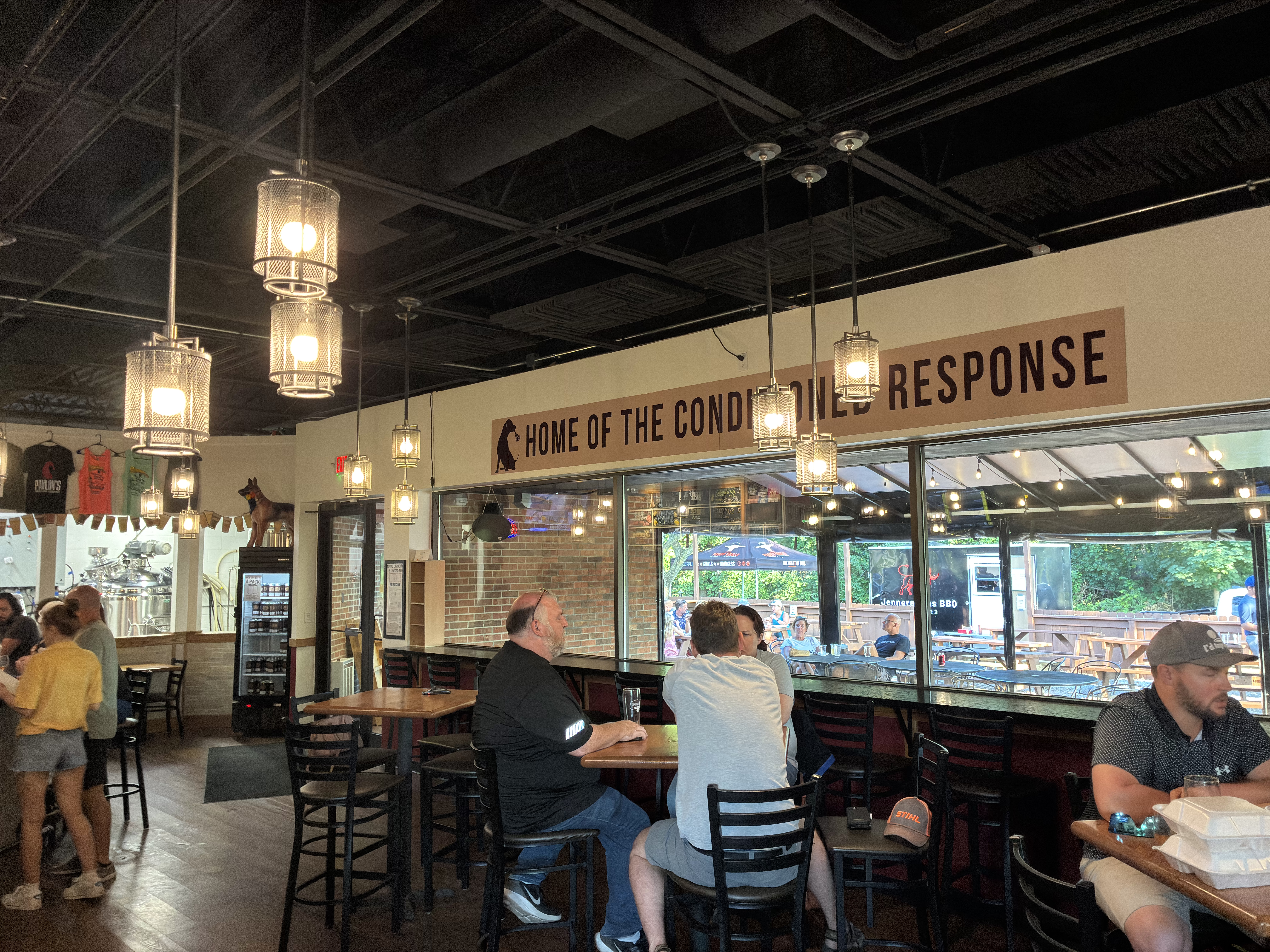
Quenched & Tempered Brewing Co. Toledo, OH
Red Rock Brewery, Salt Lake City, UT (Airport Location)
San Diego Tap Room, San Diego, CA
Seek Beer Co., San Diego, CA
Steamworks Brewing Company, Vancouver, Canada
Stone Brewing, San Diego, California (Airport Location)
The Laird Arcade Brewery, Tiffin, OH
Vault Brewing Company, Yardley, PA
Woods Boss Brewing Company, Denver, CO
Yaletown Brewing Company, Vancouver, Canada
Voodoo Brewing Company, Toledo, OH

Remembering the Edmund Fitzgerald

Fifty years ago this month the SS Edmund Fitzgerald, a Great Lakes freighter, sank in a violent storm in Lake Superior. None of the twenty-nine crew members survived. At 13,632 tons she was, and still is, the largest ship to have sunk in the Great Lakes. Eleven days before her sinking, during a routine inspection in Toledo, OH the Coast Guard found that some of the hatch covers that sealed the cargo area would not close properly. This, it appears, may have contributed to the Fitzgerald’s sinking. When it sank the Fitzgerald was carrying more than 26,000 tons of iron ore (in the form of taconite pellets) from Superior, WI to Detroit, MI – a journey it had made many times. Four of the crew crewmembers were from Toledo – Ernest M. McSorely (Captain), Eugene W. O’Brien (Wheelsman), William J. Spengler (Watchman), and Robert C. Rafferty (Steward/Cook).

Throughout history the Great Lakes has seen somewhere between an estimated 6,000 to 10,000 shipwrecks. Despite the large numbers, it is the sinking of the Fitzgerald that has remained front and center in the minds of the North American public (or at least those of us fortunate enough to live on or near the Great Lakes). To a large extent, we have the Canadian singer/songwriter Gordon Lightfoot to thank for that. In 1976, Lightfoot released the song “The Wreck of the Edmund Fitzgerald”. For the week of November 20, 1976 (a little over a year after the disaster) the song reached number 1 in Canada on and number 2 on Billboard Top 100 in the United States. According to Scott Bauer, writing for the Associated Press, “Without the song, ‘The Wreck of the Edmund Fitzgerald’ may have been largely forgotten

While Gordon Lightfoot deserves kudos for keeping alive the memory of the Edmund Fitzgerald, a couple of Great Lakes breweries have also contributed. None more so than the aptly named Great Lakes Brewing Company in Cleveland, OH whose Edmund Fitzgerald Porter “is a bittersweet tribute to the legendary freighter’s fallen crew—taken too soon when the gales of November came early”. According the Dan Conway, co-founder of Great Lakes Brewing Company, “ the dark, rich colors and flavors of our porter seem to match the image of iron ore that the Fitz transported through the Great Lakes.” Not surprisingly, Great Lakes Brewing Company honored the 50th anniversary of the freighter’s sinking. On November 10 and 11, 2025 they hosted an event that included an educational presentation and a moment of silent reflection. For every pint of their Porter sold on those two days, the brewery donated one dollar to the Great Lakes Shipwreck Museum in Paradise, MI.

Edmund Fitzgerald Porter by Great Lakes Brewing Company in Cleveland, OH pays tribute to the freighter and the twenty-nine men who died when it sunk

Another brewery, Quenched and Tempered in Toledo, OH also partnered with a local museum, The National Museum of the Great Lakes, to remember and honor the Edmund Fitzgerald. To commemorate the event Brewery owner Ali Drozdowicz and brewmaster Alex Drozdowicz created a one-off beer – a Copper Ale. The beer was given the name “Toledo Express”, one of a number of nicknames given to the Fitzgerald.

Toledo Express Copper Ale brewed by Quenched & Tempered Brewing Company in Toledo, OH commemorates the Edmund Fitzgerald

Toledo brewery, Earnest Brew Works also brewed a special beer as a tribute to the crew of the Fitzgerald. The aptly named ‘Gales of November’ captures the brutal weather conditions that proved fatal to the freighter and its crew. Gales of November is a Blackberry Sour which clocks in at 7.5% ABV.

Gales of November, brewed by Earnest Brew Works in Toledo, OH is a tribute to the twenty-nine men who perished when the Edmund Fitzgerald sank

Naming beers after local landmarks, historical events, or notable figures exemplifies a concept known as neolocalism. Geographer Stephen M. Schnell of Kutztown University defines neolocalism as “the conscious attempt of individuals and groups to establish, rebuild, and cultivate local ties and identities.” In a separate paper co-authored with Joseph S. Reese of Edinboro University, Schnell and Reese argue that many craft breweries actively embrace neolocalism through various strategies—one of the most common being the selection of beer names that reflect connections to the local community. The three beers highlighted here, which commemorate an event deeply rooted in Great Lakes communities such as Cleveland and Toledo, serve as clear illustrations of this practice.

Further Reading:

Schnell, Stephen M. and Joseph S. Reese. 2003. Microbreweries as tools of local identity. Journal of Cultural Geography, Volume 22, Issue 1, Pages 45-69.

Craft Breweries Don’t Need Your Wacky Advice Mr Robichaux

Last month, the New York Times published two pieces focused on the craft brewing industry. The first by Julie Creswell was titled “Craft Breweries Struggle as Sales and Appetites Wane“, while the second by Mark Robichaux was titled “Wacky Labels and Silly Names Are Killing Craft Beer“. Both addressed the current challenges facing the industry. But that’s where the similarities ended. The piece by Ms. Creswell was carefully researched and littered with facts, while that by Mr. Robichaux was, to use his own words, just plain wacky.

In her article, Cresswell presents some of the hard facts regarding the challenges facing America’s craft brewing industry – declining sales, more brewery closings than openings, higher prices for key raw materials such as aluminum and hops, heightened competition, and shifting consumer tastes. The article had interviews with brewery owners, including Nico Freccia of 21st Amendment Brewery in San Francisco, CA and Kim Kavulak of Nebraska Brewing Company in La Vista, NE. In other words, it was a well-sourced piece of journalism.

The piece by Mark Robichaux is a different story. In Mr. Robichaux’s defense, however, it was presented as an “opinion piece”. The writer is clearly a beer drinker having “chased beer across continents and dive bars”. Although an opinion piece, Robichaux’s does identify some of the legitimate challenges facing the industry – declining sales, the impact of remote work, and changing consumer tastes.

But Mr. Robichaux is an optimist – a glass half full guy as he admits – and believes that it is the brewers themselves who hold the key to a bright and vibrant future. As he states, “there are a few simple steps the craft beer industry can take to immediately address its downturn”.

First, it must” abandon” its “obsession” with IPAs and “bring back the pilsner, the amber, the pale ale, or reinvent the lager”. While bemoaning the dominance of IPAs, Mr. Robichaux also takes a swipe at high ABV (Alcohol by Volume) beers. IPAs are very popular among craft beer drinkers, accounting for 49.4% of off-premise craft beer sales in 2024. Yes, that’s a lot of IPA and it does suggest that there is still plenty of consumer demand for this hop forward style. If, on the other hand, you don’t like IPAs, or want a break from them, there are plenty of other styles to choose from. Walk into most craft breweries and there is plenty of choice – Brown Ales, Lagers, Saisons, etc. I have never went to a craft brewery and felt that there were never enough non-IPAs from which to choose. So I’m not quite sure what Mr. Robichaux‘s beef is with IPAs.

Second, Mr. Robichaux lodges a complaint about the high alcohol by volume beers that some craft breweries produce. Well, if you don’t like them don’t drink them – it’s as simple as that as far as I am concerned. And, as with beer styles, there are plenty of lower ABV beers to choose from when you visit a craft brewery.

Goldwater Brewing in Scottsdale, AZ offer a variety of beer styles at different strengths

Third, Mr. Robichaux suggests that some craft brewers have gone too far with beer names and labels. The industry, he claims, “need smarter labels”. Beer names such as “Sour Me Unicorn Farts” and “Hopportunity Knocks” are a step too far for Mr. Robichaux. Beer labels should “tell drinkers what’s inside”, what the beer tastes likes, and whether the prospective buyer will like the beer or not. Yes, some of the beer labels can be a little over the top, especially those that veer towards the psychedelic. But I’ve never had any problem finding the information I need – brewery name, beer style, the ABV, and IBUs. As for what the beer tastes like. Well, that’s part of the fun of drinking craft beer – trying a beer you have never had before. and then forming your own opinion of it. We all have different palates after all, and a beer that Mr. Robichaux enjoys may be an anathema to me.

Most craft beers such as this Copper Ale from Quenched and Tempered Brewing Company in Toledo, OH provide information on ABV and IBUs.

Finally, Mr. Robichaux makes a plea for craft brewers to “ditch the tallboys and four-packs” and reinstate six-packs as the standard to-go offering in craft breweries. For those of you unfamiliar with tallboys, they are 16-ounce cans that are typically sold as four-packs. He claims, without any evidence I may add, that tallboy four packs represent a sleight of hand on the part of craft breweries as the contain less beer than six-packs (64 ounces vs 72 ounces) and therefore offer an “illusion of value”. On top of that Mr. Robichaux notes that by the time he is halfway through a tallboy it is warm and flat. I can’t say that this is a problem I, nor any of my tallboy drinking friends, have experienced. If you are concerned about it becoming too warm, stick the partially empty can into the refrigerator and grab it when your glass needs refilled. I hope Mr. Robichaux is decanting his tallboys into a glass and not drinking them straight from the can.

In closing, I’d suggest that Mr. Robichaux fails to give sufficient credit to craft brewers when it comes to business acumen. One of the hallmarks of the craft brewing industry is the ability of the brewers to respond to both existing and changing consumer preferences. I was reminded of that in a recent visit to Seek Beer Co. in San Diego, CA. When I was there Seek had about a dozen different beers on offer, including a Vienna Lager, a Coffee Stout, a Fruited Sour, a West Coast IPA, and a Hazy IPA. Yes, they brewed IPAs, but they brewed plenty of other good stuff as well. Second, all but one of the beers available (an Imperial CoffeeStout) had ABVs of under 7%. I asked owner Dave Ohmer about this, and he said that this simply reflected market demand. Higher ABV beers had not been selling fast enough. This preference for lower ABV beers (although many would consider 6.9% to be quite high; its relative guess) is consistent with a broad market shift towards lower alcohol beers that has been observed. My point here is that craft brewers don’t need Mr. Robichaux to tell them what beer to brew, what containers to put it in, or what labels they should put on their cans. They are quite capable of meeting the market where it’s at and brewing accordingly.

Dave Ohmer of Seek Beer Co. in San Diego, CA is cognizant of the types of beer that his customers want him to brew

Craft Breweries: Social and Environmental Advocacy

One of the things that I like about craft breweries are the myriad ways they are embedded within and engage with their communities. This can range from naming a beer after a local event of historical significance to hosting a weekly yoga class to raising money for a local non-profit. As noted on the website of the Brewers Association a defining characteristic of craft brewers is that they “tend to be very involved in their communities through philanthropy, product donations, volunteerism and sponsorship of events”. In a 2023 paper published in the Annals of the American Association of Geographers, Colleen Myles and colleagues at Texas State University examined the different ways in which craft breweries across the United States engage in what they term advocacy. Their findings reveal breweries engage with their communities in a wide variety of ways, with environmental and social issues being particularly important to them. Indeed, 43% of the breweries sampled engaged in some form of social advocacy, while nearly a third engaged in environmental advocacy.

Examples of both types of advocacies abound. Brewability, a brewery in Englewood, CO hire employees with a disability, while Metazoa Brewing Company in Indianapolis, IN donate 5% of their profits to animal and wildlife organizations. With respect to environmental advocacy, SaltWater Brewery in Deray, FL use edible, biodegradable six-pack rings made from barley and wheat remnants — an innovation that helps combat the pernicious impacts of plastic pollution on both oceans and marine life. Meanwhile, Portico Brewing in Somerville, MA have a comprehensive environmental stewardship program that includes a reduce, reuse, recycle initiative, adding pollinator plants to their patio, and, in 2024, collaborating with the Massachusetts River Alliance to raise awareness of river restoration initiatives by hosting a trivia night.

I recently had the opportunity to experience firsthand an event where a craft brewery’s support for both social and environmental advocacy overlapped. The event was a collaboration between one of my local breweries, Quenched & Tempered Brewing Co and Metroparks Toledo, in support of the latter’s Good Natured Membership Program. The mission of the Good Natured Program is “to help break down the barriers that prevent historically underserved individuals, groups, and communities from experiencing, engaging with and benefiting from our area’s natural resources”. Funds raised in support of the Good Natured Program are used to support programing which provides fun ways for underserved communities to connect with nature and the outdoors. The Metroparks system is one of the Toledo region’s greatest assets. It comprises nineteen parks that encompass ~12,000 acres of protected natural land. Its vision is the “conservation of natural resources; strengthening of community; and the activation and promotion of spaces that enhance physical and mental health”.

The evening was billed as a “Paddle and Pint” event. The “paddle” part of the evening (in which I did not participate) involved kayaking on the Maumee River from Middlegrounds Metropark to Glass City Metropark – a distance of under a mile. The second part of the evening (which I did attend) was the release of Quenched & Tempered’s Saw-Whet Sangria Ale, a portion of the sale of which will go towards support of the Good Natured Program. The beer release took place in “The Garden” section of Glass City Metropark, where entertainment was provided by one of my favorite local bands, Chloe and the Chloe and the Steel Strings.

Quenched & Tempered’s Saw-Whet Sangria Ale, a portion of the sale of which will go towards support of the Good Natured Program.
Saw-Whet Sangria Ale by Quenched and Tempered Brewing Company was released at the Paddle and Pints event
Local band Chloe and the Steel Strings provided entertainment at the Paddle and Pints event

The Glass City Metropark provided a spectacular setting for the beer release. Opened in 2023, on a former brownfield site, the park provides a multifunctional space which includes a mini waterpark, a nature-based playscape an adventure playground, a kayak cove, an ice-skating/roller skating ribbon, and a locally owned restaurant. The park is located on the east side of the Maumee River just across from downtown Toledo.

Located on the east side of the Maumee River, the Glass City Metropark provided a spectacular setting for the Paddles and Pint event

What I really enjoyed about this evening is that it was happening in a beautiful new Metropark that has, since its opening, made a considerable contribution to enhancing the quality of life for Toledo residents. The beer being celebrated was made by a locally owned brewery, the food available was from a locally owned restaurant, and the entertainment was provided by a local band. And all of these came together in support of a local charitable non-profit whose primary mission was to create fun and educational opportunities for underserved communities to access, enjoy, and learn about the natural environment. The evening proved to be a resounding success – a good time was had by all and, more importantly, a local charitable cause was showcased and supported.

Further Reading

Myles, Colleen C., Delorean Wiley, Walter W. Furness, and Katherine Sturdivant. 2023. Brewing change: Advocacy in craft brewing in the United States. Annals of the American Association of Geographers, Volume 113, Issue 4, Pages  996-1019.

Guinness and the Student’s t-test

Well, that’s another St. Patrick’s Day behind us. I am not really a green beer person, and don’t care much for corned beef (although I am partial to cabbage). So, I usually don’t participate in the celebrations that occur on the famous saint’s feast day. This year, however, I did make a presentation on St. Patrick and the history of Guinness as part of the monthly Pint Talk series at one of my local breweries, Quenched and Tempered.

Speaking about St. Patrick and the history of Gunnesss at Quenched & Tempered Brewing Company (Photo Credit: Beth Schlemper)

As I was preparing my talk, my oldest daughter sent me a text asking if I knew that the student t-test was developed by an employee of Guinness. My daughter is a nurse and is working on her Master of Science degree in Nursing at Ohio University. In one of her classes, the instructor was covering some basic statistical techniques. This is where the student’s t-test came up. I responded to her text, telling her that I was indeed familiar with both the test itself and the fact that it had been developed by a Guinness employee, and that both would be mentioned in my presentation.

William Sealy Gosset was born in Canterbury, England in 1876. As a student at Oxford University, Gosset studied mathematics and chemistry. Soon after graduating from Oxford, in 1899, Gosset joined the Guinness brewery in Dublin, Ireland, as a master brewer and experimental scientist. As it was to turn out, all of Gosset’s working days (1899-1937) were spent as a Guinness employee. When he joined Guinness, it was the largest brewery in the world, producing close to 1.2 million barrels of beer. And it was on a growth trajectory. By 1914, it was producing almost 2.4 million barrels.

William Sealy Gosset

The arrival of Gosset at Guinness signaled something of a scientific revolution for the Irish brewery – from that day forward, scientific rigor would underpin all of the brewery’s activities. As noted by Stephen T. Ziliak, “all factors of production, from barley breeding to taste testing” would be “controlled, improved, and confirmed by experimental science”. A degree in science from Oxford or Cambridge would be required of anyone hoping to become a Guinness brewer. By applying scientific principles to brewing, Guinness hoped to improve both the quality and consistency of its beer, while minimizing production costs. One observer likens being a brewer at Guinness in the early 1900s to “being a computer scientist at Bell Labs in the 1970s or an artificial intelligence researcher at Google today“.

Quality and consistency of the final product was highly dependent upon the quality and consistency of the barley and hops used in the brewing process. In the case of hops, Guinness’ traditional method of choosing which to use was based on looks and/or fragrance – a highly unreliable technique. A more reliable method would have been knowledge of the degree of soft resins in the hops. This was problematic, however. The vicissitudes of agriculture meant that there could be considerable variation in the soft resin content of hops, both from field to field and year to year.

Measuring the soft resin content in every hop cone was not feasible. By 1886, Guinness was using ~5 million pounds of hops. An alternative was to take a sample of hops and measure their soft resin content. But this raised some important questions? For example, how many hop cones did you have to sample? And how could you tell if your samples were representative of the larger batch of hops you were considering using in the brewing process. This was one of the tasks to which Gosset set his mind. In 1906 Guinness granted Gosset a sabbatical to work on this problem, so he spent a year at the Biometrics Laboratory of mathematician Karl Pearson at University College London.

Gosset was particularly interested in the problem of small samples. In other words, by measuring the soft resin content of a small sample of hops, can you infer that the entire crop has an acceptable soft resin content? Up until that point, all methods for extrapolating from a sample relied on having at least 30 observations. It was during his year at Pearson’s laboratory that Gosset figured out how characteristics of larger populations could be inferred from a very small number of samples. In his initial work he did not focus on hops. but malt extract. By taking just four samples of malt extract Gosset found that he could be sure with more than 92% certainty that the “degrees saccharine” of the extract was within 0.5 degrees of the required amount which was 133 degrees.

In 1908 Goset published the results of his research in the journal Biometrika. He did so under the pseudonym “Student”. While Guinness was happy for Gosset to share his work, they preferred that competitors not know for whom the author worked and the manner in which the brewery was applying his research. Indeed, Gosset used the same pseudonym in 19 of the 21 scientific papers he published.

As a result of Gosset using the pseudonym in his paper, the statistical technique that he presented became known as Student’s t-test. Today the Student t-test is taught in every introductory statistics course in the world (I don’t know that for sure, but I can’t imagine an introductory statistic’s course without it).

It is also widely used by both academic and non-academic researchers. For example, in medical research it can be used to compare the effectiveness of two drugs (or a placebo and a drug) in a clinical trial, while Psychologists might use it to assess the impact of therapy on an individual (before and after therapy scenarios). A manufacturer may use it to assess whether average customer satisfaction rating for a new product differs significantly from a pre-determined benchmark.

In a letter published in the Pakistan Journal of Medical Sciences, Younis Skaij described the Student’s t-test as the ‘bread and butter” of statistical analysis. Writing in the Scientific American, Jack Murtagh, called the Student’s t-test as “one of the most important statistical techniques in all of science“. As Gosset’s research was published under the pseudonym of Student, he probably does not get the recognition he deserves among the scientific community. But next time you raise a glass of Guinness to your lips, give a thought to this “gentleman scientist“.

Further Reading:

Ziliak, Stephen T. 2008. Guinnessometrics: The economic
foundation of “Student’s” t
. Journal of Economic Perspectives, Volume 22, Issue 4, Pages 199–216.